NEWS
Conclusions
In summary the DuraMist is a concentric, self-aspirating inert
nebulizer that provides excellent sensitivity and precision.
Results show its ability to handle up to 20% TDS without
clogging and excellent precision and long term stability in
the presence of 2.5% NaCl. Data showed that the DuraMist
had only slightly lower sensitivity than the SeaSpray, and
out performed an NCPN in both precision and sensitivity.
Although the OpalMist is still the preferred nebulizer for
ICP-MS applications, we believe the DuraMist will gradually
replace the PolyCon for ICP-OES application involving HF.
Final specifications of the DuraMist are listed below.
Specifications
• HF resistant PEEK body and insert
• High TDS Tolerance: up to 20%
• Up to 75um particles (for larger uptake)
• 0.4 and 1.0mL/min uptake models
• Either 1.0 or 0.7L/min argon flow
Reference
1. E. Poussel, J.M. Mermet, and O. Samuel, Simple
experiments for the control, the evaluation and the
diagnosis of Inductively coupled plasma sequential systems,
Spectrochimica Acta Part B, 48, 1993, 743-755.
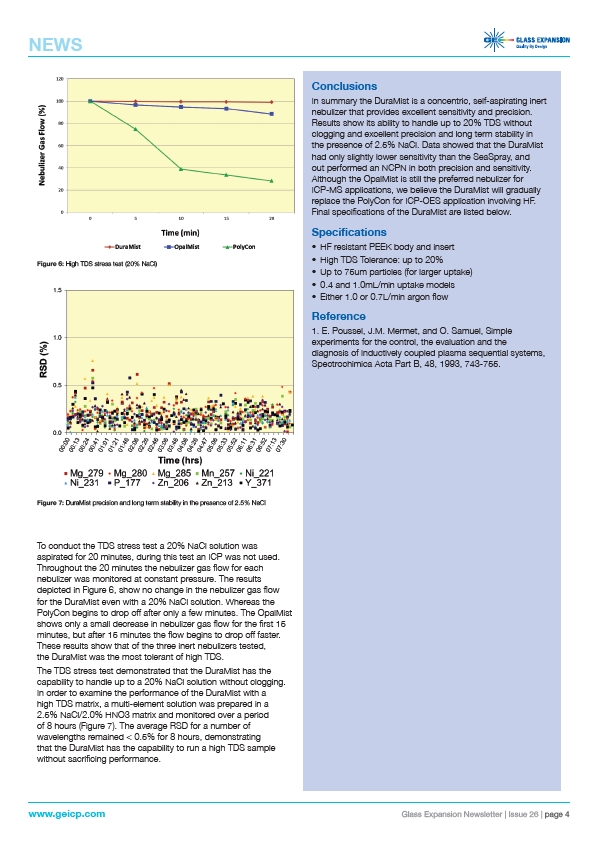
Figure 6: High TDS stress test (20% NaCl)
Figure 7: DuraMist precision and long term stability in the presence of 2.5% NaCl
To conduct the TDS stress test a 20% NaCl solution was
aspirated for 20 minutes, during this test an ICP was not used.
Throughout the 20 minutes the nebulizer gas flow for each
nebulizer was monitored at constant pressure. The results
depicted in Figure 6, show no change in the nebulizer gas flow
for the DuraMist even with a 20% NaCl solution. Whereas the
PolyCon begins to drop off after only a few minutes. The OpalMist
shows only a small decrease in nebulizer gas flow for the first 15
minutes, but after 15 minutes the flow begins to drop off faster.
These results show that of the three inert nebulizers tested,
the DuraMist was the most tolerant of high TDS.
The TDS stress test demonstrated that the DuraMist has the
capability to handle up to a 20% NaCl solution without clogging.
In order to examine the performance of the DuraMist with a
high TDS matrix, a multi-element solution was prepared in a
2.5% NaCl/2.0% HNO3 matrix and monitored over a period
of 8 hours (Figure 7). The average RSD for a number of
wavelengths remained < 0.5% for 8 hours, demonstrating
that the DuraMist has the capability to run a high TDS sample
without sacrificing performance.
www.geicp.com Glass Expansion Newsletter | Issue 26 | page 4